
So, every time you pick up a newspaper, magazine, or browse the internet, you are bound to see advertisements, lots and lots of them. Ever wonder who writes all of these catchy ads? The answer is a copywriter. Writing copy for a client basically means creating the best way, through words, to attract a targeted audience. Many people work from home as freelance copywriters and others work for copy writing or search engine optimization (SEO) companies. This is a career that doesn’t necessarily require fancy college degrees, extensive experience, or a large start up budget. There are necessary skills which will ensure a person’s success in this industry and there are steps you can take to build a lucrative career in copywriting.
Friday, June 11, 2010
Copy Writing (Writing Copy), By Melinda Toynton

Wednesday, June 9, 2010
About Memoir and Personal Essay

You're Writing About What....From Where?—by Derek Pettie

Travel writing sounds like a phenomenal career for an English major, so why not start off this exploration in Mongolia. Well I'm not there, but that is where I found Bill Donahue, a freelance writer who has written for magazines such as The Atlantic, Backpacker, and Runners World, newspapers like the Washington Post and The Oregonian, and news website Salon.com. While waiting for his second email, I speculated what he was doing on the other side of the world: trekking in the Sayan Mountains, traveling across the country’s 1900 miles on horseback or covering the Horse procession documenting Ghengis Khan’s 850th anniversary? Actually he had “scared” up a smaller story to write about, cycling from Ulanabatoor, Mongolia’s capital city, 35 miles to the world's largest statue of Khan, before traveling to Bejing for an article on American ultra-marathoner, Diane Van Deren.
Jealous yet?
If the answer is yes, then it's time to delve further into what the job entails. Travel writing is more than just reviews and is primarily about the writing rather than the travel. An important distinction to make. Whether a piece is written about a pilgrimage to Djibouti to discover what chewing Khat leaves is all about, or covering a destination or event near your home, what matters is the quality of the writing. Frank Bures, a freelancer from Minnesota, has focused on building his career by improving as a writer, instead of trying to get published in high-profile publications. This has had led to pieces in Outside, Bicycling and he is currently working on a story for Harpers.
Still interested?
Tuesday, June 8, 2010
Advertising by Zack Little
Advertising
If you have been watching any television in the last couple of years, you might have stumbled across a program by the name of Mad Men. Set in the 1960's at the fictional Sterling Cooper advertising agency, it follows the story of Don Draper, a creative director. But what does Don Draper do while at work? If the show is any indicator, he's simply there to consume as much scotch and as many cigarette's as he can fit into a workday. Oh an occasionally he finds time to pitch a good advertisement to a big client in order to save the day. It all sounds like a cool job if you ask me. But is this the real world of advertising? Let's take a look at what advertising has to offer to the world and you.
Monday, June 7, 2010
The Ghost and the Subject

Ghostwriting has many advantages over other kinds of writing careers. Ghostwriters get to write about an array of subjects, many of which they normally wouldn't, with people that often lead interesting lives. These are people that are largely inaccessible, sometimes great minds who stand at the precipice of the fields they have achieved notoriety within.
Saturday, June 5, 2010
Literary Agency by Jeff Fischer
 One of the least written about careers toward which English
majors might naturally gravitate is the literary agent. Though literary agency,
or literary representation, is not a subject normally taught in school,
literary agents are as much a part of the book business as are writers and
publishers. What some English majors who are starting to think seriously about
a career path may not know is that literary agents are indispensable in the
ever churning mill of the book business.
Literary agents are the brokers between authors and publishers. Literary agents find emerging writers and
help those writers prime their work to a saleable product while at the same
time finding saleable authors for commercial publishing companies who rely on agents
for this service.
Friday, June 4, 2010
Music Journalism- By Devan Cook
To put it
simply: music journalism, or music criticism, is reporting about music. Critics
of popular music will often write album reviews, song reviews, concert reviews
and previews, band/artist profiles, music related news, etc. While music
journalism is most frequently associated with magazines like Rolling Stone and
Spin, music critiques can be found everywhere from local weeklies, television
broadcasts (this once included MTV, back
when the “M” actually stood for music), websites and blogs, and major
newspapers like the New York Times.


Wednesday, June 2, 2010
Beer Career by Michel Entler
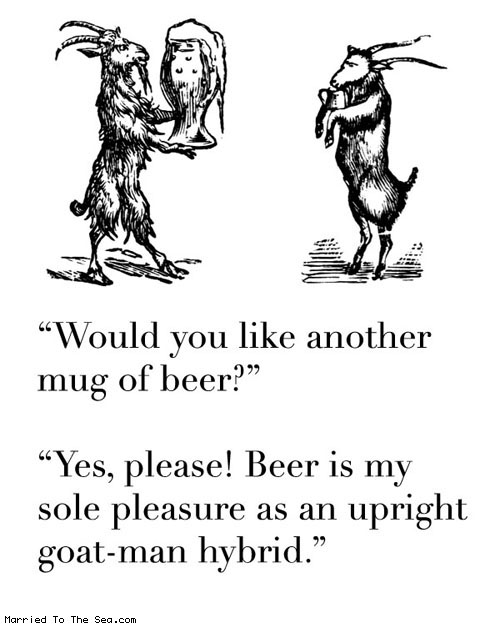
I
know what you are thinking “I love beer so much I wish there was a way to
combine my skills as a writer with my love of beer.” Well never fear because
there is a lot of options for writers in the world of beer. You have to think
of brewing as a business and a big business at that in fact, INBEV (owner of
Anheuser-Busch) in 2008 was an 11.6 billion dollar company. Like any big business they need people
who are creative and are able to produce something that can market their
product.
Now
that I have sold you on the beer industry here are a few options for you: First
is marketing, English majors are great when it comes to marketing products.
Companies desire someone who can be creative with word play, lettering design,
and descriptions of the beer to put on the side of the box. The problem with
people who have marketing degrees is that they can provide a brilliant look web
site or box design but fail at providing the content needed to keep the
interest of the consumer. One great example of that is the “Prost” underneath
any Widmer cap. Those catchy phrases are more than likely written by someone
who is good at writing.
Tuesday, June 1, 2010
Copywriting; Every Word Has Its Price by Brittany J. Barron

News Papering-- by N Otis Richerson
 Maybe you smoked too many cigarettes when you were in High School You sat around, inside dark rooms with your dork friends watching the sliced onion smoke curl up to the dim fluorescents, talking about how great it must have been back then—all high ideals. Maybe, you like the look of the Fedora; you like the look of the dark trench coats with the belt pulled tight against your sides, with the rain pouring down. Maybe, you’re all grand notions of changing the world through noble questions.
Whether it’s your misguided conceptions of temporary cool or your overwhelming need to know–you crave to write for the daily news. Just how do you go about doing that? In the time of free untrafast Internet news, is it even worth the trouble? What’s the gig? Is there a career in daily news? How do you get into it?
Monday, May 31, 2010
Screenwriting - by Craig Looney

The world just came to an end for 199 students.
To say screenwriting is a difficult industry to break into, is like saying the sun is hot. It doesn’t capture the shear enormity of it. But to say it’s impossible would be incorrect as well, because a new legend is growing.
Sunday, May 30, 2010
Book Editing, by Jennifer Anderson

“I suppose some editors are failed writers; but so are most writers.” - TS Eliot
What do doctors, lawyers and editors all have in common? A well-known stereotype for each profession has leaked into the social consciousness. Doctors, sterile and comforting with a white lab coat; lawyers, stiff and exacting with a business suit; editors, red pen wielding tyrants, armed with cutting remarks. Perhaps unfortunately for us, not every doctor is patient and kind, nor is every lawyer prepared and articulate. With that being said, editors are far from the angry-faced grammarians their reputations suggest. They are largely unseen, and as writer and editor, Jodi Brandon calls them, “the unsung heroes” of the publishing industry. Acquisition, copy and structural editors are the men and women behind-the-scenes working to make sure that books are found and promoted; have continuity and correct grammar and spelling; and the pages, fonts and layout of the book are easy to read.
Music Journalism- By Justin Hoyt
 For musicians, creating a brand for oneself is the most important factor in becoming a recognized and revered artist; the same goes for music writers. However, the art in music writing is a reaction, a gut feeling everyone gets when they listen to a song is put into words and hopefully understood by the reader. In a clogged market for music writers though, being able to define the way one feels about a song or album isn’t enough; you need to be able to define it quickly in an age where new music spreads across the internet at a stellar pace. It’s kind of petty but seems crucial that music writers know about the next big thing before everyone else does. It lends them credibility and in many cases is what defines a music writer’s career, allowing them to ascend in what is an incredibly competitive field. Take for example Seattle Times music writer Andrew Matson and Seattle hip-hop group Shabazz Palaces. Shabazz Palaces (pictured above) was and still is a relatively unknown hip-hop group from Seattle’s Central District. The group has no MySpace page, and were cloaked in mystery for much of their early existence. Matson was one of the first to publicly write about them and has championed the group ever since, even bestowing them the honor of his “Best Album of 2009”. Recently the group was discovered, in part due to some of his Twitter updates, by Larry Fitzmaurice of the mighty online music site Pitchfork. Matson immediately went to work blogging about blogging. A portion of which is below:
Grant Writing: Making a Difference-By Sara Lindsey

Working Your Skills: What does it take to be a fantastic Grant Writer?
A grant writer
performs a very important role for many charitable institutions and non-profit
businesses (such as, animal shelters, community outreach programs and cause
related assistantships.) Additionally, they may work with universities,
colleges, and community alternative education programs. Due to the lagging economy,
grant money has become far more difficult to obtain from private philanthropic
foundations, cooperate foundations, and individual donators. On one hand, this
makes the grants harder to get a hold of, however, the role of a highly skilled
grant writer has become a far more valued profession in the job market.
Friday, May 28, 2010
Comics-obsessed Kids Grow Up to be Comics-obsessed Adults, and Others Acquiesce

Yes, I know, it sounds like I was an uptight and pretentious youngster. Well, maybe I was. But after hesitantly dipping my toe into adulthood and discovering that it wasn’t as bad as I had imagined it would be, I was able to loosen up to a more sensible and enjoyable openness. I began to notice that there were comics written on myriad topics. Not only this, but there was this new term that I had never heard before referring to comics that had a decidedly more literary ring: “Graphic Novel.” Some of the subjects that graphic novels are written about include autobiography, history, religion, science fiction, romance, and (yup) superhero stories.
Working Hard Pays Off: A Guide For The Would Be Short Story Anthology Editor by Colin Farstad

When I first started talking to Kevin Sampsell about his involvement in the anthology Portland Noir we were walking downtown the few blocks from Kenny and Zukes, over to Powell’s Books, Kevin’s home for the past eleven years. When I finally asked Kevin about how he became the editor for Portland Noir he said, “Well I kind of got talked into it.”
Johnny Temple, Publisher of Akashic Books, approached Kevin because he has collected a body of work that features short stories online and in print, a previously edited anthology and a network of writers from his years at Powell’s. Even though there was someone else that wanted to edit Portland Noir, Johnny Temple wanted Kevin Sampsell.
Johnny Temple, Publisher of Akashic Books, approached Kevin because he has collected a body of work that features short stories online and in print, a previously edited anthology and a network of writers from his years at Powell’s. Even though there was someone else that wanted to edit Portland Noir, Johnny Temple wanted Kevin Sampsell.
Thursday, May 27, 2010
Writing up a Fortune: the Easy Life of Freelancing - by Fleecy

Wednesday, May 26, 2010
Web Content—Writing Is Not Designing

Tuesday, May 25, 2010
Writing the Adventures
 Somewhere people are actually being paid to write about testing free gear in the Alps, hiking in Alaska with their kids, and being dropped by helicopter into the woods and finding a way out. And at least one man has been paid to climb and write about Mt. Everest. Outdoor magazine journalists inspire people to get outside, whether it’s on hiking trails, bikes, skis, rivers or mountains.
As a subscriber of such myself, these writers show parts of the Earth, most of which I’ll probably never go, but remain grateful for the opportunity to know that such wild and rugged places are out there. Food for fantasy. But, for the trips I do go on, the various magazines have their own mission that tries to show where the best and freshest places are, what gear is solid, as well as supplying essential safety and other clever tips. After that, it’s up to the reader to get out and make his or her own adventure happen.
Writing for Public Health: A Meeting of Manipulation and the Greater Good By Rosie Mckinlay-Mench

Subscribe to:
Posts (Atom)